Berlin, the capital that witnessed some of the darkest history of humankind.
It survived two world wars and a cold war. Destroyed almost completely, transformed and in constant reconstruction. A cosmopolitan city that never sleeps and welcomes everyone who wants to be part of it.
Depending on which part of the city you arrive in, your first impressions can be misleading. To understand its architecture and its different points of interest, we need to immerse ourselves in its history.
That is why I have prepared a list of the main attractions to visit in Berlin.
1. Brandenburg Gate
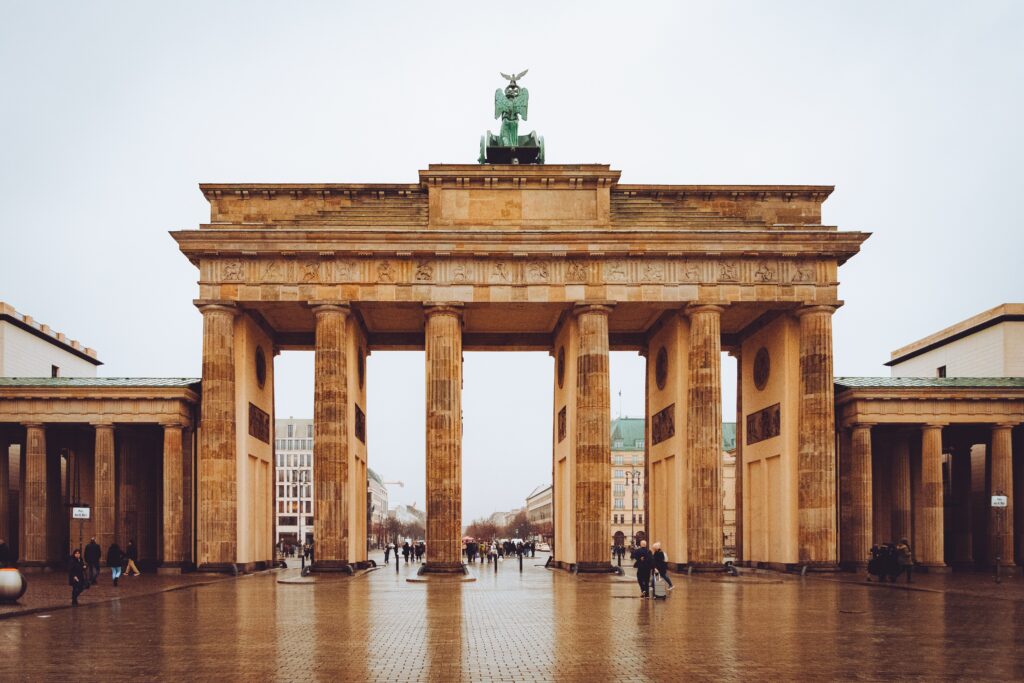
Neoclassical in style, the Brandenburg Gate is the most important attraction to visit in Berlin. It was built by the architect Carl Gotthard Langhans and inaugurated in 1791 at the request of the Prussian king Frederick William II.
Two years later it was crowned with its famous quadriga, which over the course of history has undergone countless modifications.
The woman in its original design is Irene, the goddess of peace. When the Franco-Prussian war ended, she was stolen by Napoleon and kept in Paris to be displayed as a war trophy. She was finally recovered when the Prussian empire captured Paris and defeated the French.
Irene, the goddess of peace, was turned into the goddess of victory, and the square next to the Brandenburg Gate was named Pariser Platz.
During the Second World War the gate was almost entirely destroyed, and after the war, in the midst of the sovereignty conflict, the Brandenburger Tor ended up literally in the middle of the divide between the communist and capitalist blocs. It was not until the fall of the Wall that this witness to history became the icon of a unified Berlin.
2. Holocaust Memorial
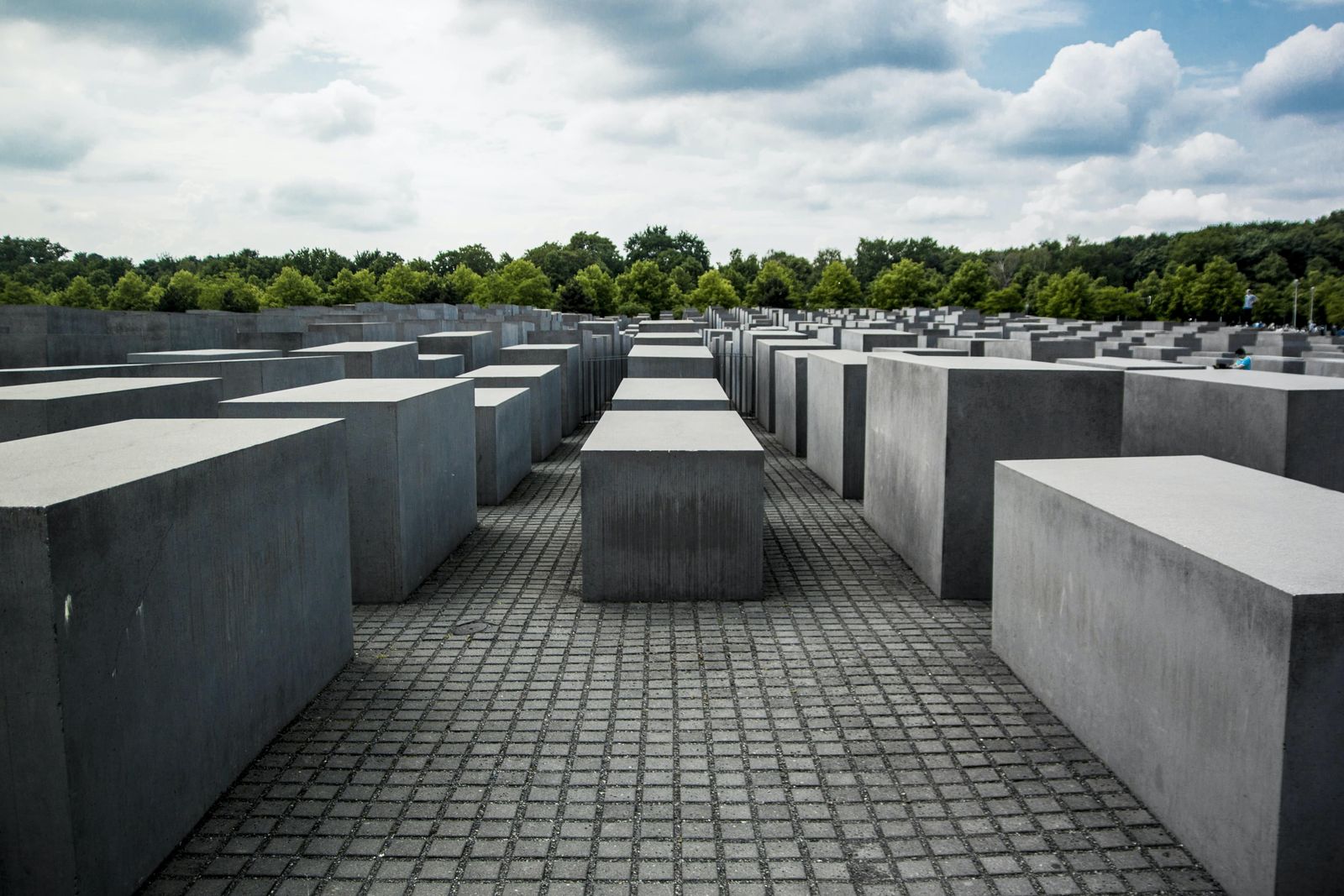
A brilliant memorial designed by the architect Peter Eisenman and the engineer Buro Happold between 2003 and 2005.
Its concrete blocks of different heights and its sloping ground give us a sense of discomfort and confusion. Its narrow, labyrinthine paths were designed to convey stress and isolation to those who visit. Needless to say, it has multiple interpretations.
This monument, dedicated to the genocide of six million Jews and intended to keep their memory alive, is without doubt one of the most visited places in Berlin. Beneath its structure there is an information centre with guides and information available. Inside you will find sections that review the National Socialist policy of extermination between 1933 and 1945, as well as the testimonies and the history of different families before, during and after the persecution.
Entry to the centre is free, but the audio guides, available in several languages, are not.
When visiting Berlin and coming to this monument, I recommend being respectful and responsible. It is strictly forbidden to stand on the concrete blocks.
3. Parliament (Reichstag) in Berlin
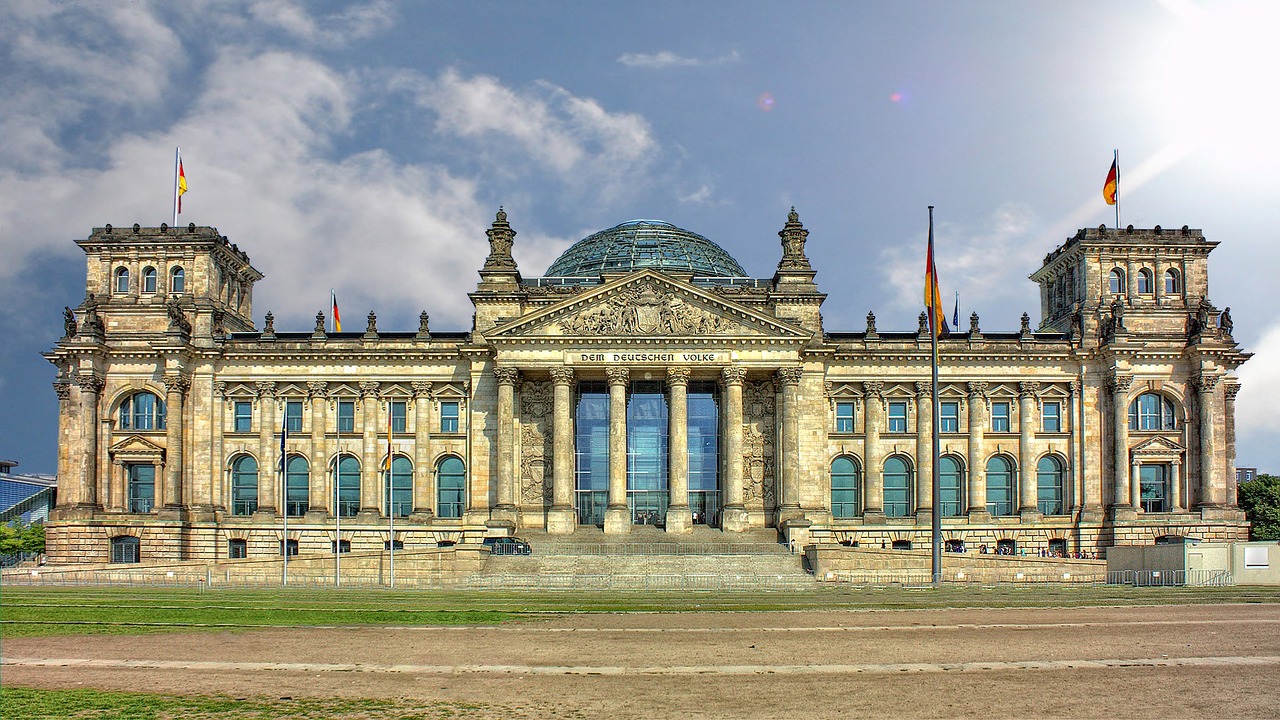
It is one of the most important buildings in the city. It was designed in 1894 by Paul Wallot, who combined elements of the Renaissance, the Baroque and Classicism.
From the proclamation of the Republic from one of its balconies to the deliberate fire that destroyed its dome in 1933, four weeks after Hitler became chancellor, it was both witness and victim of Berlin's turbulent history, and it was almost completely destroyed in the Second World War.
After the war it was rebuilt in the context of a divided Germany. So much so that in 1990 the Reichstag square was the place chosen by Berliners to celebrate the reunification of a country battered for decades.
However, it was not until 1999 that the renowned architect Norman Foster finished crowning the building with its majestic glass dome, turning it into the monument to democracy: the idea that visitors can see through the glass is meant to symbolise the transparency of parliament.
This is definitely one of the places you cannot miss. Entry to the dome is free and can be booked on its official website.
4- East Side Gallery
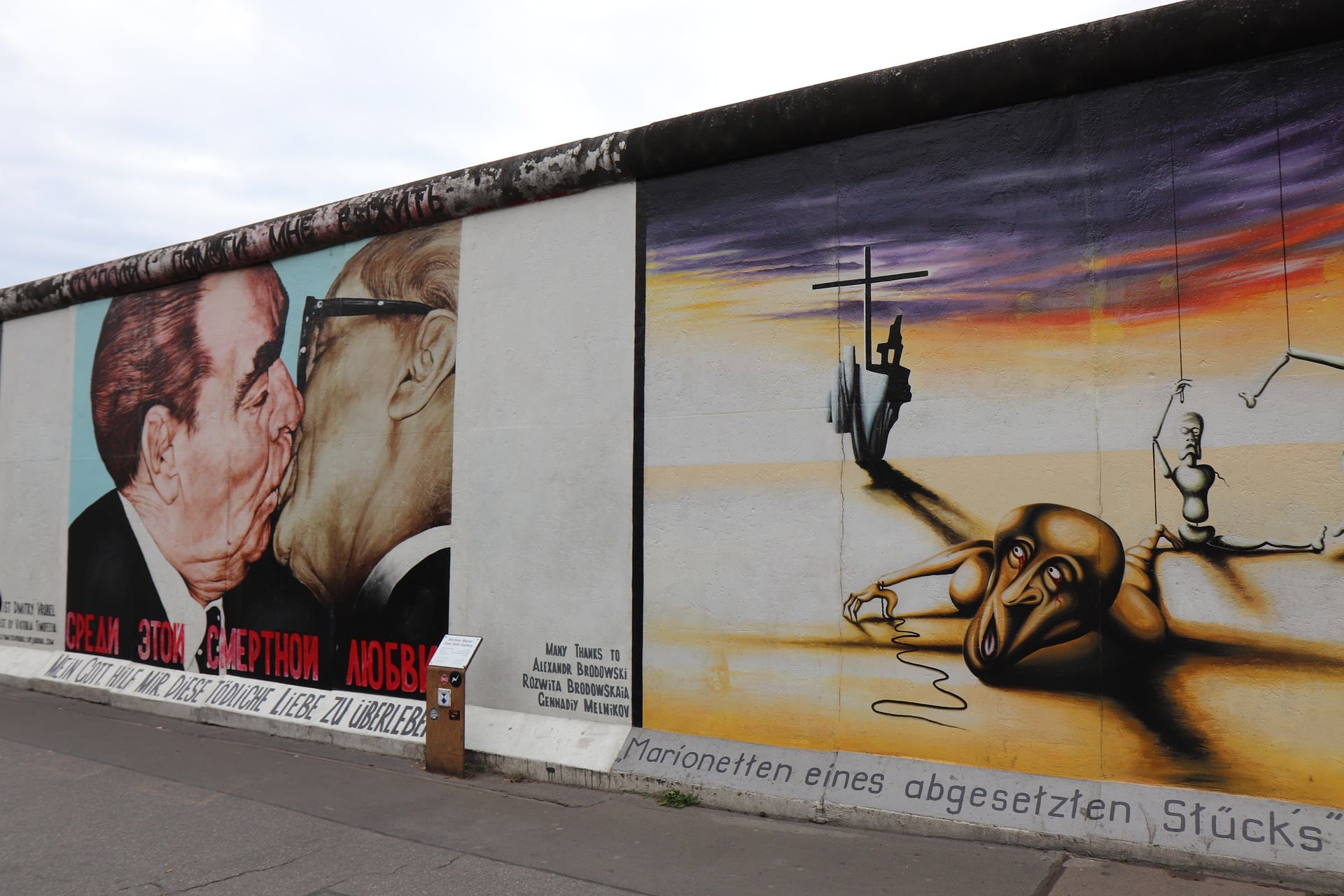
Without a doubt, when it comes to visiting Berlin, the East Side Gallery is the most notable symbol of celebration of German reunification. It is the largest open-air urban art gallery in the world.
Stretching 1.316 kilometres, the work of more than 118 artists from 21 different countries decorates the eastern part of the city, paying tribute to the fall of the Wall in 1989 and the end of the Cold War.
As you walk around the city, you will find on the streets the mark where the Wall once stood. However, on the banks of the river Spree, the East Side Gallery rises imposingly to remember and pay homage to freedom. Without a doubt, a place well worth visiting.
5. Tiergarten
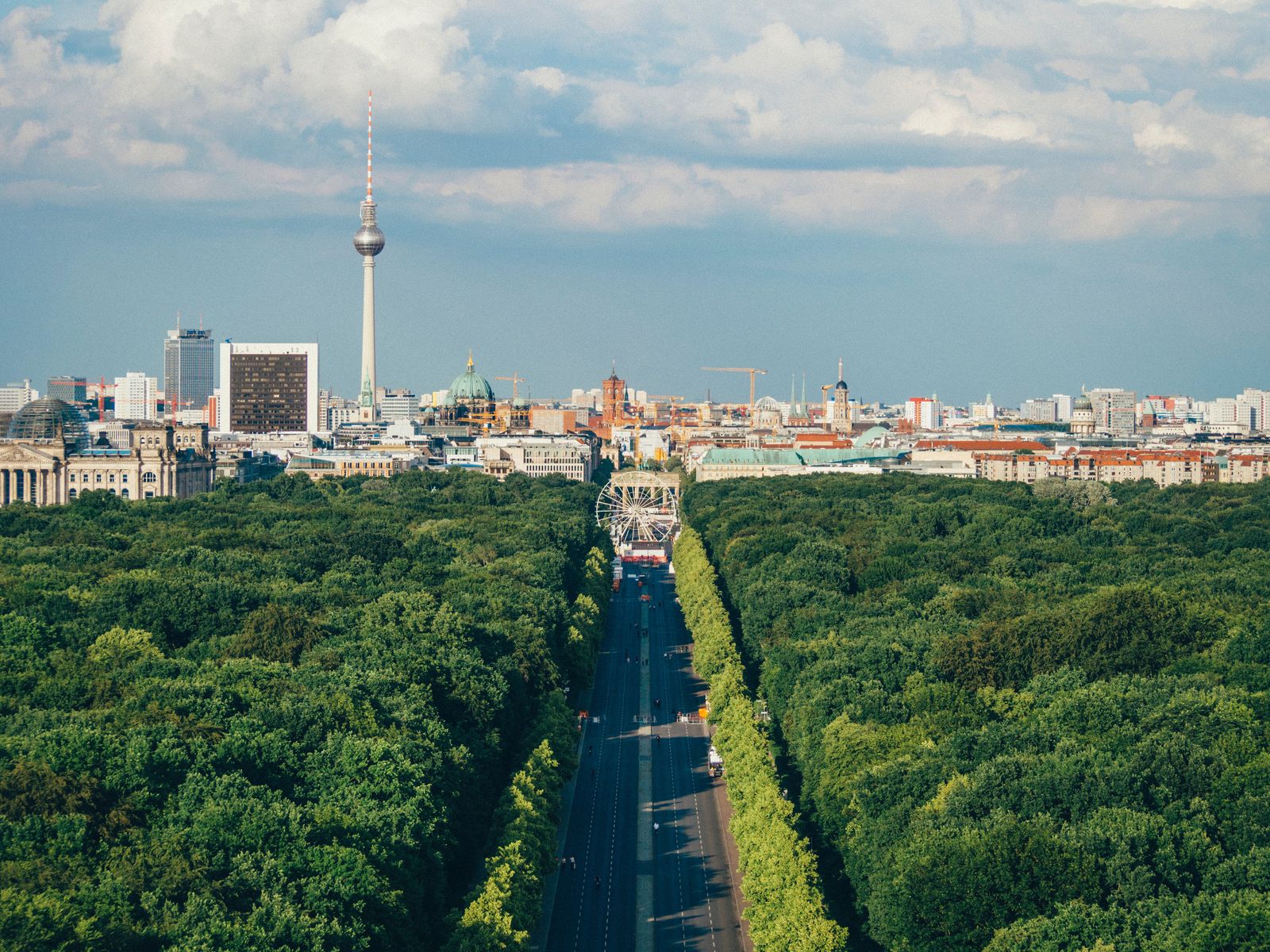
Originally created as a hunting ground for wild boar and deer for the aristocratic families of the Prussian era, the Tiergarten, with its more than 200 hectares, is the city's main green lung, where people go every day to have picnics, rest or simply ride a bike.
Next to the Brandenburg Gate and the Holocaust memorial, you will find endless leafy trees, paths, lakes, small dreamlike corners and the diverse wildlife that lives there. Inside the park you will also find the Soviet Memorial and the Victory Column, another symbol of the German capital.
I recommend exploring this park by bike, as I mentioned earlier, and taking the time to stop and enjoy each of its parts.
In my view, these have been the main places to get to know this wonderful city. I hope they are useful to you, and in the next instalment I will tell you about those “hidden” places that are part of Berlin's identity.