What to see in Budapest and why visit the city?

People always ask me: what to see in Budapest and why visit the city? Since the first time I lived in Budapest, more than 20 years ago, I have always considered Budapest one of the most beautiful, interesting and complete cities in Europe and in the world, whether as a tourist or to live in.
The Hungarian capital is an international city with a great range of spaces for education, recreation, gastronomy and culture, establishing itself as one of the favourite destinations in Europe, and was even chosen by the organisation "European Best Destinations" as the number 1 destination for this year, 2019.
In this post I am going to tell you a little about the main reasons that might help to finally convince you to put this city on your next list of destinations. In short: what to see in Budapest and why visit the city?
Architecture you can admire during your visit to Budapest

Thanks to the city's rich history, Budapest has a wide mix of architectural styles that will amaze you. The most representative are the Baroque style, found most strongly in the Castle district on the Buda side, and the neoclassical style, which is more present in the tourist area of Pest. This makes the city perfect for those who like taking photos of both natural and urban landscapes.
Buildings you can't miss
Here are some of the most representative and emblematic buildings you will find, and which I always include whenever I'm asked what to see in Budapest and why visit the city:
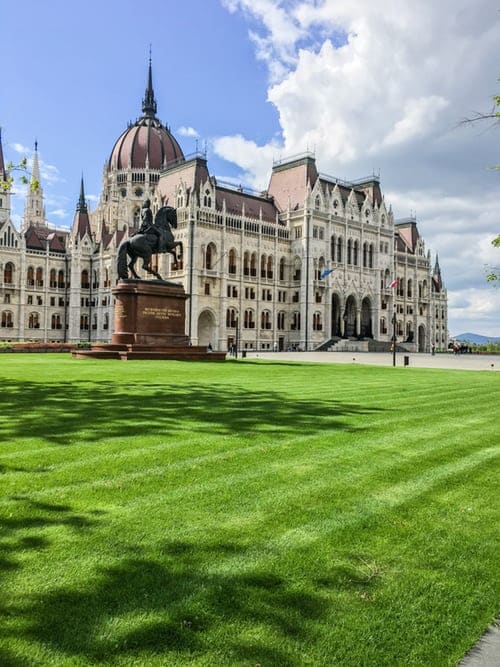
- Parliament, in particular my favourite. Whether by day or by night, it is impossible to resist looking for the best photographs every time you walk past it or spot it in the distance
- St Matthias Church, located in Buda Castle, in the neo-Gothic style
- St Stephen's Basilica, the main church in Budapest, located in Pest, and from its viewing platform you get amazing views of Buda Castle. If you are a football fan you will be interested to know that two famous former Hungarian footballers are buried in the Basilica, as they have been treated as national heroes: Puskas and Kocsis
- Royal Palace, located in Buda, which imposingly dominates most of the views over the Danube
- Vajdahunyad Castle, located in Pest in Varosliget (the city park), which combines different architectural styles but is mainly known for being a replica of Hunyad Castle in Romania (many years ago part of Hungarian territory), known as Dracula's Castle.
Other interesting buildings are: the Opera House, the National History Museum, the National Bank of Hungary, the Great Synagogue, the Aquincum Museum, the Café New York, among many others.
Transport you can use during your visit to Budapest

If you have already travelled around Europe it won't surprise you to learn that transport on this continent, especially in the main cities, is really very good, and Budapest is no exception to the rule.
How is transport organised in Budapest?
With a transport network that includes 4 main metro lines (among them the Millennium line, the first built in continental Europe), tram services, buses, trolleybuses, suburban trains, boats and bicycles, as well as taxis and other private services such as scooters, motorbikes and rental electric cars, you can be completely sure that on your journeys you will always have a public transport option to get to your destination.
How to pay for transport in Budapest?
If you are visiting for just a few days you can buy different transport tickets, ranging from a single journey costing HUF 350 (approximately EUR 1.10) to tickets valid for 1 to 7 days that you can use without limit across the whole public transport network, if you are on holiday, or even 1 month for those of us who live in the city.
For those spending a holiday period in the city, there is always the option of buying the Budapest Card, which lets you use public transport without limit for the number of days you choose, as well as offering discounts at some restaurants and tourist attractions such as spas and museums.
Transport from the airport to the centre
Bear in mind that if you arrive in Budapest by air, you will land at Ferenc Liszt international airport, and to get to your destination in the city you can take taxis or the different private companies that offer a transport service from the airport to the city.
You will also have the option of arriving by bus on route 100E, which takes you to the Deak Ference Tér metro station, the largest in the metro system, where you can connect with metro lines M1, M2 and M3 as well as different transport services such as buses and trams that you can use to reach your destination. The ticket for this bus costs HUF 900 (approximately EUR 2.5) and is not included in any of the travel cards.
At the following link you can find all the related information so you can plan your visits https://www.bkv.hu/en/ once you have seen what to see in Budapest and why visit the city.
Food you can enjoy during your stay
If there is one thing I can't resist when I travel, it is eating the way the locals eat! I think there is no better opportunity to get to know the roots of a culture than trying its flavours. After all, culinary traditions are the accumulation of as many years of existence as each town, city or country we visit has, and in the case of Budapest and Hungary their traditions have been with them for thousands of years, so for Hungarians their gastronomy is a national symbol and each of their dishes an expression of who they are as a people.
In Budapest you will have the chance to get close to Hungarian flavours in countless traditional restaurants where you can try everything from the famous gulyás (a stew of meat and vegetables) to different kinds of pickles, cured meats, soups and a wide variety of breads, desserts and pastries, something Hungarians are increasingly known for.
Base ingredients of Hungarian cuisine
Apart from paprika, which is the most widely used ingredient in most Hungarian dishes, the cuisine includes, among other ingredients, pork fat and pork as a base, although quite a lot of chicken, turkey and rabbit is also eaten and, to a lesser extent, beef. All of these are always seasoned with things such as garlic, onion and different spices that give Magyar food its characteristic flavour, and are served mainly with breads and pasta in different forms, as well as vegetables and pulses such as turnips and peppers.
Traditional fast food
Now, if what you fancy is something quick and delicious you can try Langos, a round fried dough that can be eaten on its own or with different toppings. The most traditional (and my personal favourite) is the "Sajtos Tejfölös Lángos", which is nothing more than the fried dough served with sour cream, cheese and garlic. You will also find other traditional fast food options such as hamburgers, hot dogs, etc.
Desserts!
As for sweet food, in Hungary you will be able to enjoy a great variety of desserts and sweet breads, as Hungarians love sweets. However, the best known dessert is Palacsinta, a crepe served with different jams, jellies, sugar, among other accompaniments. A curious fact about Palacsinta is that Hungarians claim the French copied their recipe and popularised the dish, thus stealing the authorship from the Magyars.
In addition, you should try the ice creams you will find at different stalls and ice cream parlours around the city. They are not to be missed and are especially refreshing in the hottest seasons.
Parks and spas to include in your visit to Budapest

Thermal baths, health and fun all in one place!
Budapest is known worldwide for its thermal baths and they are one of my answers whenever I'm asked what to see in Budapest and why visit the city. In Budapest we have more than a hundred thermal baths, which makes visiting these places a common thing for the inhabitants of the city and of the country in general; Hungary is the fifth country in the world with the highest number of thermal springs.
Some of the best known thermal baths are:
- Szécheny, the most famous and largest of them all, with a total of 18 pools inside
- Palatinus Furdo, located on Margaret Island and renowned not only for its thermal springs but for its water park complex, which this year, 2019, was rated one of the 5 best in all of Europe
- Gellért, with indoor and outdoor pools, is renowned for having been built as a luxury spa for the members of the Hungarian aristocratic families.
But beyond the wellbeing and health promoted by these places, there is fun for the whole family, with hot and cold pools, indoors or outdoors, including the option of joining different parties at night where you combine the fun of the water with good music and a few drinks, with plenty of safety measures to avoid possible accidents, as you can imagine.
Outdoor parks
Apart from the fun in the water, Budapest has a large number of parks where you can have fun with your friends and family; wide, extensive hectares of nature and tranquillity can be found in places such as Városlíget (City Park) or Margaret Island, which you can visit to play some sport, play in their fountains, have a picnic or simply lie back in the shade of one of their trees to rest and pass the time. For the little ones there are many playground parks in the city, all with different safety measures such as padded floors and fences to stop any of your children running off if you lose sight of them.
Monuments and museums you will see on your visit to Budapest

If there is one thing I admire in Hungarians, and which I also find very important, it is how proud they are of their history, and you can feel it in the number of monuments and museums found all over the city; wherever you walk you will find a statue, a monument or some kind of commemoration of a figure, event or important date in the history of this country.
Well-known monuments you should include on your route:
- Heroes' Square (Hosók Tere). The city's main square, where on one side you find the statues of the most important kings and leaders in Hungarian history.
- Liberty Statue. Located at the Citadella viewpoint, and placed there after the end of the Second World War.
- Shoes on the Danube Bank. A commemoration of the murder of thousands of Hungarian citizens during the Second World War, who were then thrown into the River Danube.
- Anonymus, statue of the Hungarian historian and writer popularly known as Anonymus. This historian is credited with writing the book Gesta Hungarorum, the foundation book of Hungarian history; as his name suggests, nobody knows his real name
- Statue of King Saint Stephen. In the Fisherman's Bastion in the Castle district stands the statue of King Saint Stephen I on his horse, founder of the Hungarian state, who ruled Hungary between the year 1000 and the year 1038.
Speaking of museums, we also find a great many of them in the city, and if you have enough time you should include at least a couple of them, especially the National History Museum and the Budapest History Museum. They will help you understand the background of Magyar history very well, and how important this country has been for the development of Europe and the world.
In addition to these two museums, it is also worth visiting: the Museum of Fine Arts, the Holocaust Memorial Centre and the House of Terror. The last two will take you out of your comfort zone and show you in detail the cruellest and most violent aspects experienced in the country during the Second World War and during the Communist era.
Partying, the best way to end your day of sightseeing in Budapest
After days of sightseeing in Budapest, there is nothing better than relaxing with a good drink and going out partying at one of the places that make up the city's nightlife.
For some time now Budapest has been attracting attention as a place to come and party for a few days, so it is normal to see groups of friends arriving from all over Europe on Fridays and Saturdays to celebrate stag and hen parties, or simply attracted by the city's many restaurants, nightclubs and bars
Among the best known places, the "ruin pubs" stand out: bars in ruins offering different atmospheres, food and drinks in places as inhospitable as abandoned buildings or boats, with their distinctive decorations.
I hope this review has helped you understand a little more of what you can find in Budapest and helps you decide to visit this destination. You certainly won't regret it
Viszlat!!!!
Germán A.
Instagram: @amayagerman #egykolumbiaibudapesten
Don't forget to keep visiting this page for more travel tips and advice! https://www.carlosdeory.com