Are you thinking of coming to Taiwan but not sure what to expect? Here I explain what to see in Taipei, following the 10 must-see places in the Taiwanese capital.
Two years after moving to the capital of Taiwan, Taipei is a city that never stops surprising me. It offers a wide variety of exotic places for travellers to enjoy, along with the comforts of a big city. Taipei also has a broad range of activities that let you get closer to the cultural and social reality of the island state.
With almost three million inhabitants, Taipei is a city you can explore perfectly well on foot or by bike. That makes visiting the main sights even more appealing, since along the way you may still come across the odd diamond in the rough.
Those sights are what we are going to look at in this first article about Taipei. So without further ado, here are the 10 places you should visit if you come to Taipei.
Elephant Mountain (象山 Xiàng shān)
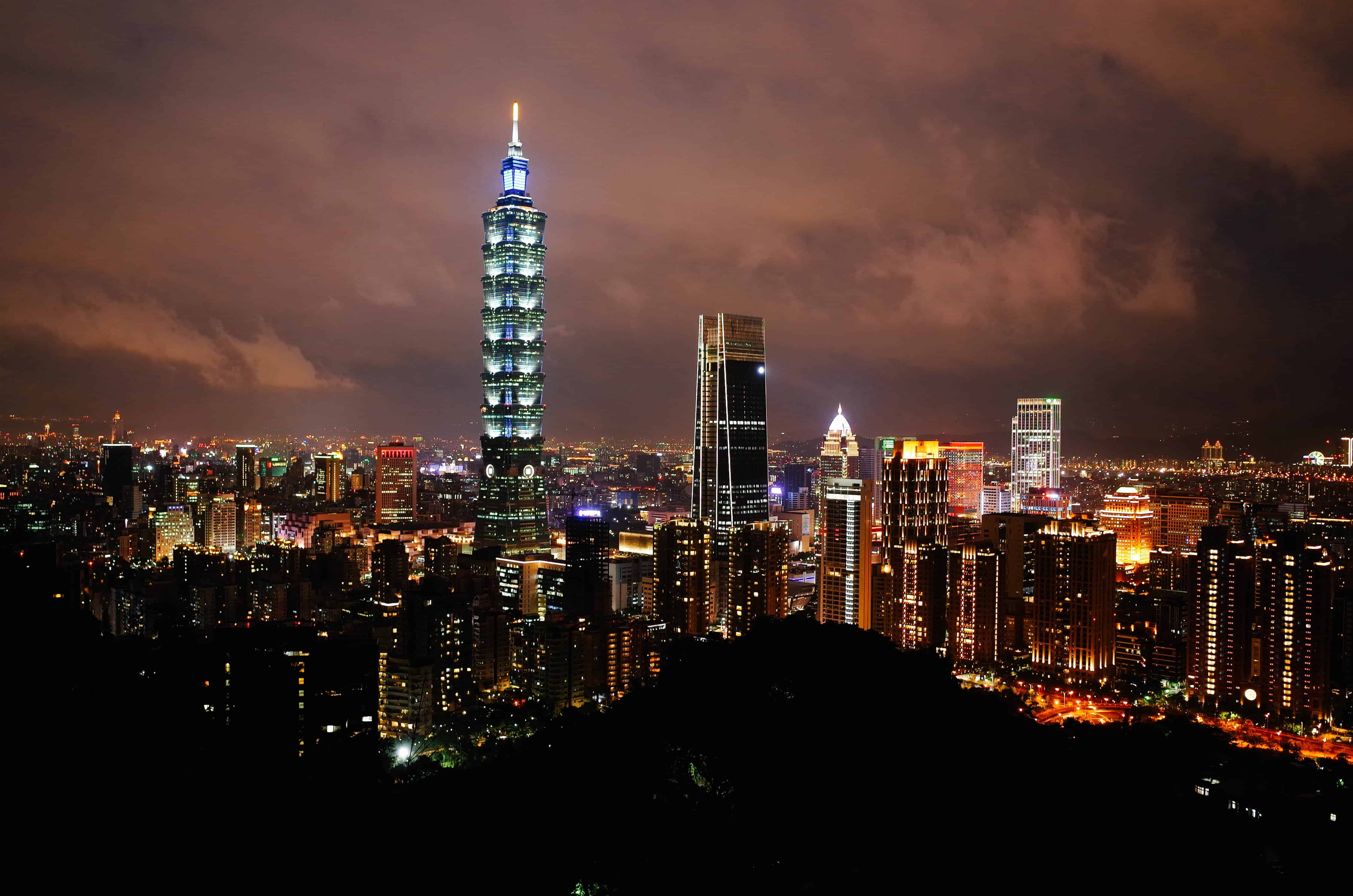
Taiwan is an overwhelmingly mountainous island, and its capital, Taipei, is nestled in a valley that is perfectly visible as you arrive by plane. Of all the peaks in Taipei's urban area, the most popular and famous without a doubt is Elephant Mountain.
Elephant Mountain, named for a shape that resembles that animal, is very close to another of Taipei's most recognisable landmarks, the Taipei 101 building. Elephant Mountain is part of a hiking route called the Four Beasts (Elephant Mountain, Tiger Mountain, Lion Mountain and Leopard Mountain). It is a perfect place to get a bit of exercise in nature, away from the noise of the city, with the advantage of being very easy to reach straight from the metro system.
However, its popularity comes from the views over Taipei. At any time of day it offers spectacular views over the centre of Taipei. Most travellers choose to climb at sunset, to watch the sun hide behind the city and see it begin to light up. Although, if you don't mind an early start, sunrise is also a real feast for the eyes. The mix of orange tones clashing with the grey of the city, seen through the green filter of the mountain, is a marvel.
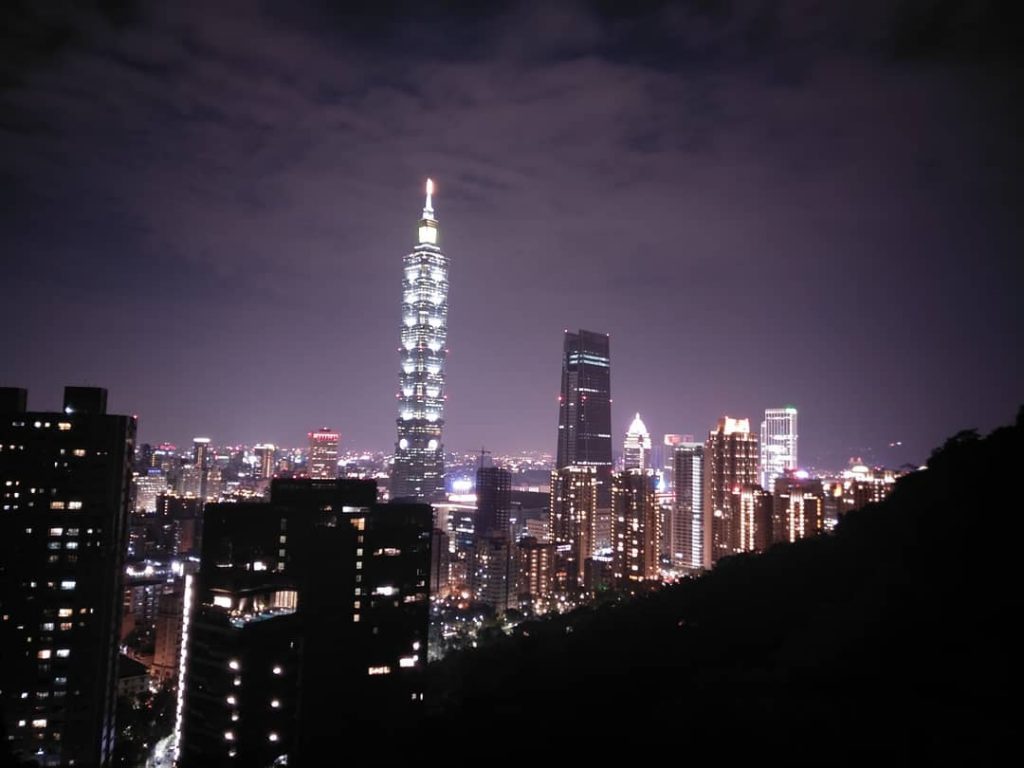
How to get there: you only need to take the red metro line to the last stop, Xiàng shān. From there take exit 2 and follow the signs (or the people).
Mercado Nocturno de Shilin (Shilin Night Market 士林夜市)
Taiwanese people may have many hobbies, but if one thing sets them apart from their neighbours, it is their passion (or sometimes even obsession) for food. Add to this the good weather the island usually enjoys all year round and you have the winning combination for street food stalls to spring up on almost every corner. However, the meccas of street food are without a doubt the night markets.
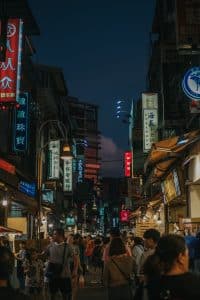
At the night markets you can find everything from food to bingo-style games, by way of fortune tellers who read your tarot and sellers offering the latest teleshopping hits. Going to a night market does not mean going out for dinner, it is a whole attitude you have to learn once you are on the island. Don't look for ONE place to eat; instead, try a little of everything and enjoy wandering among the endless stalls.
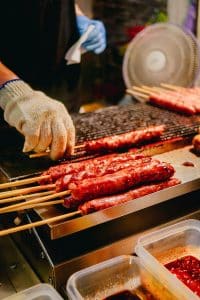
Among the most notable night markets, the one that appears on every list about Taipei is the Shilin Night Market. It is the biggest and most popular night market in Taipei, yet it remains genuine. There you will find a mix of travellers and locals enjoying the nightlife and complaining about the crowds in equal measure. Move through the maze of streets that makes it up and try as many Taiwanese “snacks” as you can, or catch your own dinner by trying your luck at the shrimp-fishing stalls, and then “fish” for a prize at the arcade machines.
How to get there: for level 1 travellers, take the red line to the Jiantan or Shilin stops and walk, letting the smells guide you.
Taipei 101
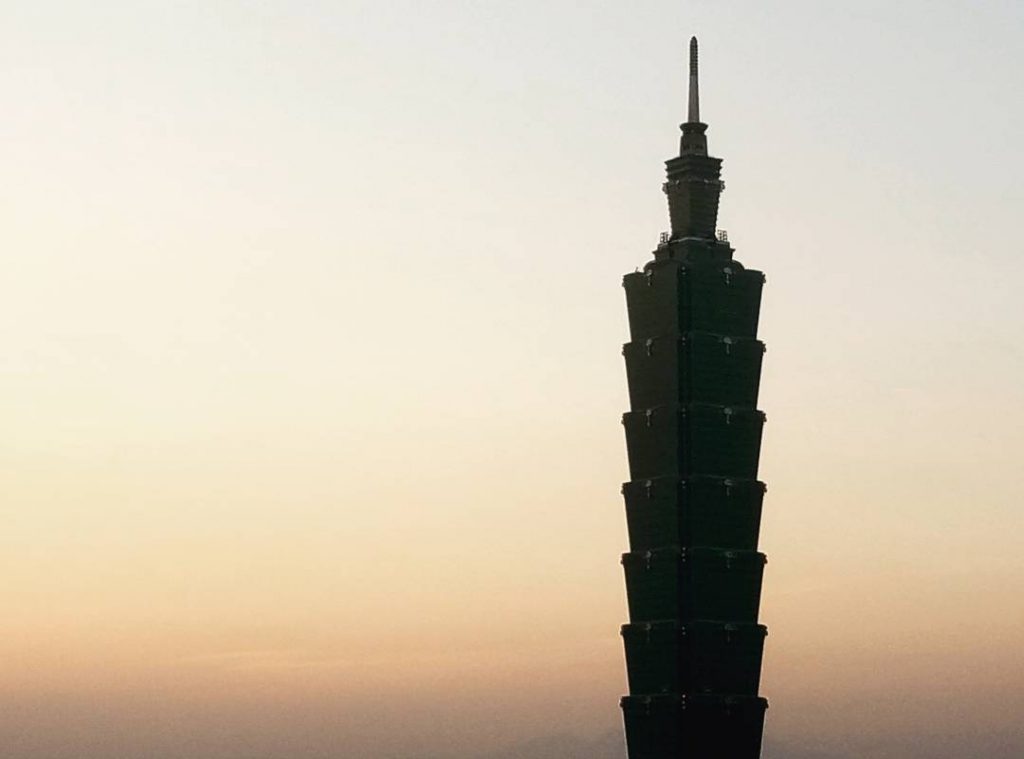
The jewel in the crown. No “What to see in Taipei” post would be complete without the most emblematic building in the capital, and you could say on the island. Visible from almost anywhere in Taipei, Taipei 101 was the tallest building in the world from 2004 until 2010, when the Burj Khalifa took the throne from it.
Taipei 101 stands out not only for its height but also for its slender shape. Inspired by temple pagodas, the different modules that make it up make it look like a giant bamboo stalk.
But why is it worth going up and seeing the inside of the tower? Because (if the day is not cloudy) you will get spectacular views over the whole of Taipei and the mountains that surround it, as well as the engineering masterpiece it keeps inside.
In a country with so many earthquakes, it is almost a miracle that such a tall building is still standing. This miracle is a ball of more than 700 tonnes at the top of the tower, which moves gently whenever there is seismic movement to minimise its impact on the architectural whole.
How to get there: take the red line to the Taipei 101/World Trade Centre metro stop.
Distrito Comercial Ximen Ding (西門町)
If Tokyo has Shibuya, London has Piccadilly and Seoul has Myeongdong, Taipei has Ximen Ding. What used to be the walled area of the old city is now a shopping district full of neon lights, which give this area a Blade Runner feel on rainy days in Taipei.
If you want to buy souvenirs or clothes, go to the cinema or have a drink after a day of walking around the city, this is your district. Full of students after school and tourists hunting for the best bargains, Ximen Ding does not leave you indifferent. Some people love the great variety of shops and restaurants in the area, and others see it as a commercial trap born of the most ruthless capitalism. Either way, it is certainly worth a visit, especially at night.
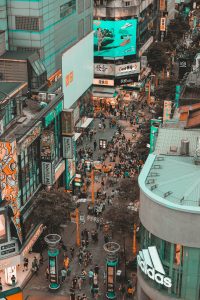
Right at the entrance to the main street of Ximen Ding, it is worth highlighting the area behind the Red House (紅樓 Hong Lou). This building from the Japanese era was used as both a theatre and a warehouse. Today its interior houses a group of hipster shops selling all kinds of items. However, from the point of view of the one writing, the best part is behind the building.
In the small space left behind the Red House and the residential buildings, you will find the closest thing Taipei has to a gay neighbourhood or area. Whether you are gay or not, if you like having a beer or a cocktail sitting on a terrace, this is your place. Pick one of the many bars with a terrace and enjoy your drink.
How to get there: it couldn't be simpler: take the metro, blue or green line, to the Ximen stop.
Calle Yongkang (永康街)
Yongkang Street offers everything a traveller is looking for, from gifts and souvenirs of all prices and kinds to street food stalls and restaurants that almost look better on your Instagram than in real life.
All along the street you will find a great variety of places to eat, but there are five spots that are almost a compulsory visit, and in fact many tourists come to Yongkang Street only to eat there.
Din Tai Fung 鼎泰豊
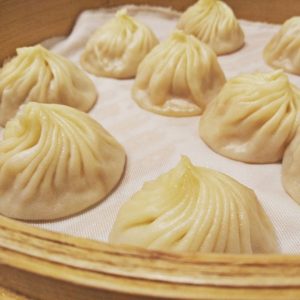
A restaurant specialising in xiaolong bao 小籠包 (steamed dumplings usually filled with meat). Here travellers can not only fill up on classic xiaolong bao but also try more innovative options such as pork and truffle xiaolong bao (my favourite) or chocolate-filled ones. A word of warning: Din Tai Fung is now a chain, found not only on Yongkang Street but all over Taipei, yet its restaurants are always packed, so arm yourself with patience for the queue.
Kao Chi 高記
It offers a great selection of xiaolong bao as well as other dishes of Taiwanese cuisine. The interior looks like the set of a period film, and the food is exquisite. While some xiaolong bao are cheaper than at Din Tai Fung, in general the menu is a little more select (but nothing that will make your bill skyrocket). If you can't face the long queues at Din Tai Fung, you can turn the corner and get to Kao Chi.
Thanh Ky's Pho
It is not a restaurant but a street food stall, though no less crowded for that. Thanh Ky's Pho is a place that sells scallion pancakes, a very typical dish, especially at breakfast. The craze for the pancakes here is such that sometimes the queue is longer than the one at Din Tai Fung. The pancakes sell for between 25 and 50 NTD (0'70€/0'80$ to 1'50€/1'70$) depending on the type.
Yong Kang Beef Noodle Soup
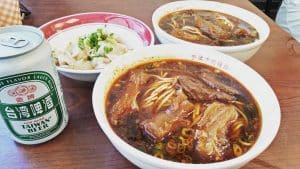
here travellers can try, as its name suggests, beef noodle soup, one of the most typical dishes in Taiwan. For less than 200 NTD (around 6€/6'50 $) you can fill up on a broth that would raise the dead. The noodle soup with half beef and half tendon is a marvel, but if you don't like to experiment you can always have it with beef only.
Finally, if after trying all these delicacies you still have a gap in your stomach, you can always walk over to Mango Shaved Ice and treat yourself to a bowl of shaved ice with mango cream, mango ice cream and mango (yes! all mango!). Of course they also offer other flavours, but mango is the most typical and is always a winning choice.
How to get there: follow the red line to the Dongmen stop and leave by exit 4 or 5.